

et’s be honest: keeping plastic tubs of chirping crickets or maintaining a breeding colony of Dubia roaches in your home isn't for everyone. They can be noisy, they carry a distinct odor, and occasionally, one will manage to escape into your kitchen.
Because of this "ick factor," it is incredibly tempting to walk down the reptile aisle at your local pet store and grab a convenient jar of "Freeze-Dried Crickets" or a colorful bag of commercial pellets. It looks easier, it is undeniably cleaner, and it is usually cheaper. But is it physiologically safe for your reptile?
As we constantly emphasize in our core husbandry guides, Pogona vitticeps are wild predators with highly specific biological requirements. In this clinical guide, we will break down the nutritional science comparing live feeders against dried alternatives, and explain why live insects remain the absolute, non-negotiable standard for a healthy dragon.
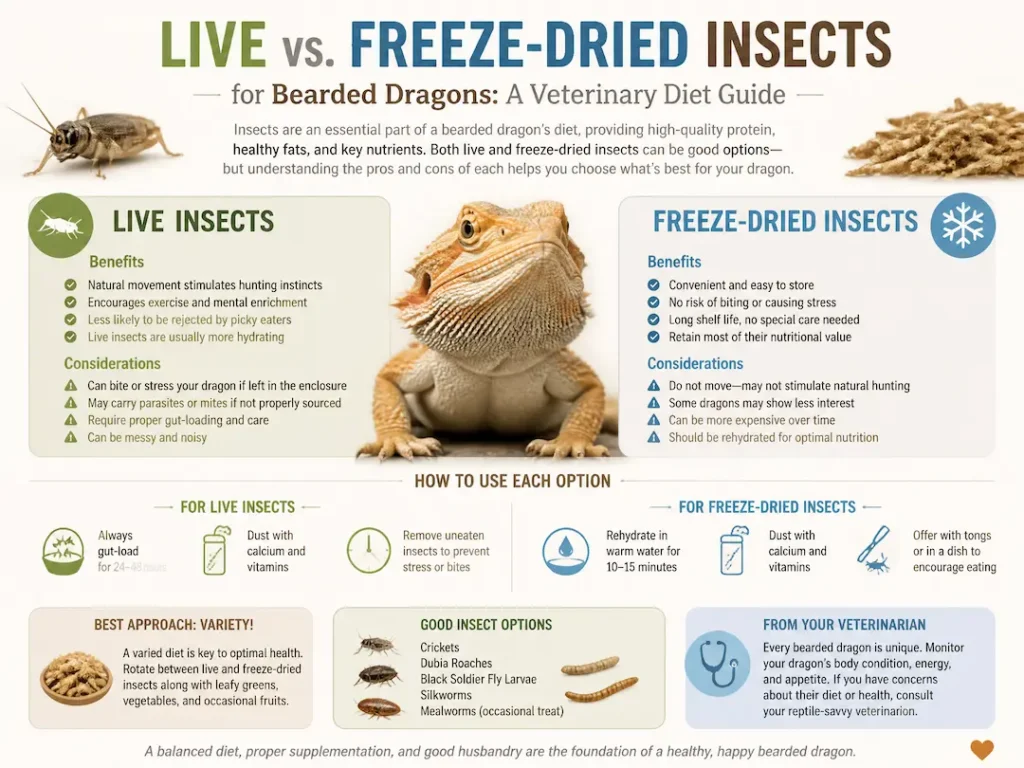
Part 1: The Fatal Flaws of Freeze-Dried & Canned Insects ⚠️
You might assume that "a cricket is a cricket," regardless of whether it is hopping around or freeze-dried in a jar. Unfortunately, the industrial processing method completely alters the biological makeup of the insect, turning a healthy meal into a severe health hazard.
1. Severe Dehydration and Organ Strain
In the arid Australian outback, bearded dragons do not stumble upon bowls of fresh water. They have evolved to absorb a massive portion of their necessary hydration directly from the bodies of their prey and the moisture in their greens.
- Live insects are composed of roughly 60% to 70% water.
- Freeze-dried insects have had their moisture content artificially reduced to near 0%.
Feeding a steady diet of dried bugs is a fast track to chronic dehydration. This forces the dragon's kidneys to work into overdrive, often leading to renal failure or severe intestinal impaction (a lethal blockage in the digestive tract caused by an inability to pass dry matter).
2. Nutrient Degradation
The extreme preservation processes (both heat-drying and freeze-drying) destroy vital, heat-sensitive vitamins and enzymes. While the crude protein content might remain intact on the nutritional label, the micronutrients degrade. To compensate, manufacturers often spray the dead bugs with synthetic vitamins, which a reptile's digestive tract cannot absorb as efficiently as natural, bioavailable nutrients.
3. The Inability to "Gut-Load"
One of the most critical aspects of reptile nutrition is "gut-loading." This is the practice of feeding your live feeder insects highly nutritious, calcium-rich vegetables 24 hours before feeding them to your dragon. This effectively turns the insect into a biological vitamin capsule. You cannot gut-load a dead, dried cricket.
Part 2: Commercial Pellets (The "Fast Food" of Reptile Diets)
You will see jars of "Bearded Dragon Bites" or brightly colored red and green pellets pushed heavily by pet store chains.
The Veterinary Verdict: Treat these exactly like highly processed fast food. Most commercial pellets are packed with cheap, artificial fillers like cornmeal, wheat, and chemical binders that dragons would never encounter—let alone digest—in the wild. While their labels boldly claim to offer "100% complete nutrition," they are exceedingly dry, starchy, and lack the hydration necessary for proper digestion. They should never replace fresh, leafy greens or live protein.
Part 3: The Clinical Case for Live Feeders 🦗
There is a distinct reason why every board-certified exotic veterinarian and experienced herpetologist strictly recommends live prey.
- Crucial Mental Enrichment: Bearded dragons are visual hunters. Chasing a cricket across a terrarium or calculating the trajectory of a leaping locust provides vital mental stimulation and physical exercise. A dragon passively fed dead bugs from a bowl quickly becomes lethargic, obese, and depressed.
- Superior Bioavailable Nutrition: As detailed in our Ultimate Bearded Dragon Food List, live feeders like Dubia roaches and Black Soldier Fly Larvae (NutriGrubs) offer the perfect natural calcium-to-phosphorus ratios required for bone health.
- Systemic Hydration: The natural fluids inside fresh bugs keep your dragon's kidneys flushing toxins properly and ensure smooth, regular bowel movements.
Is There Ever an Acceptable Time for Dried Food?
We believe in practical, realistic reptile keeping. While they should never form the core of a diet, there are rare, specific situations where having a jar of dried insects or high-quality pellets is acceptable:
- The Emergency Kit: If a severe winter storm knocks out local supply chains, or your live insect shipment is delayed in the mail, dried food will prevent starvation.
- Squeamish Pet Sitters: If you leave town for a weekend and your pet sitter is absolutely terrified of handling live roaches, a temporary diet of dried insects is safer than the dragon missing meals entirely.
Veterinary Tip: If you are forced to feed freeze-dried insects during an emergency, always soak them in warm, purified water for 10 to 15 minutes first. This rehydrates the insect and significantly lowers the risk of gastrointestinal impaction.
The Final Verdict
Dealing with live bugs can undoubtedly be a hassle, but it is an inherent part of the commitment you make when bringing a predatory reptile into your home. For your dragon to truly thrive, they require the hydration, the nutritional profile, and the predatory satisfaction that only live prey can provide.
Baby dragons absolutely need the erratic movement of live bugs to trigger their innate feeding responses, while adults require the biological hydration to keep their internal organs functioning flawlessly. Stick to the fresh stuff, and your dragon will reward you with vibrant colors and robust health.
Now that you understand what to feed, you must ensure you are feeding them in the correct volumes. Read our clinical guide on the Bearded Dragon Feeding Schedule by Age to perfectly plan your daily routines.
Frequently Asked Questions About Bearded Dragon Diets
Can bearded dragons eat freeze-dried crickets?
While they physically can eat them, freeze-dried crickets carry a high risk of causing dehydration and intestinal impaction. They lack the essential moisture and natural nutrients found in live insects and should only be used in strict emergencies.
Are commercial bearded dragon pellets good for them?
No, commercial bearded dragon pellets act like processed fast food. They are often packed with artificial binders, corn, and wheat fillers that reptiles cannot properly digest. Fresh greens and live protein are mandatory for their health.
How do you rehydrate freeze-dried insects for reptiles?
If you must feed dried insects during an emergency, soak them in warm, purified water for 10 to 15 minutes before offering them to your dragon. This restores some moisture, though it does not replace the lost nutritional value.
Do baby bearded dragons need live bugs?
Yes, absolutely. Baby bearded dragons require the erratic movement of live insects to trigger their predatory hunting response. Without live prey, babies will often refuse to eat and quickly become malnourished.
0 Comments