

Ask ten bearded dragon owners what the "best" flooring is for a terrarium, and you will inevitably start an argument. The debate over substrate is heated, filled with misinformation, and genuinely terrifying for new owners trying to do the right thing.
In my 20 years of veterinary practice, I have performed dozens of surgeries to clear intestinal blockages caused by improper bedding. The clinical reality is that while loose sand might look visually appealing, bringing a slice of the Australian outback into a glass enclosure is incredibly dangerous if your husbandry is not absolutely perfect.
As we emphasize in our core habitat guides, we must always prioritize physiological safety over aesthetic appeal. The primary medical threat we are mitigating is impaction—a fatal gastrointestinal blockage that occurs when a reptile ingests substrate they cannot digest or pass.
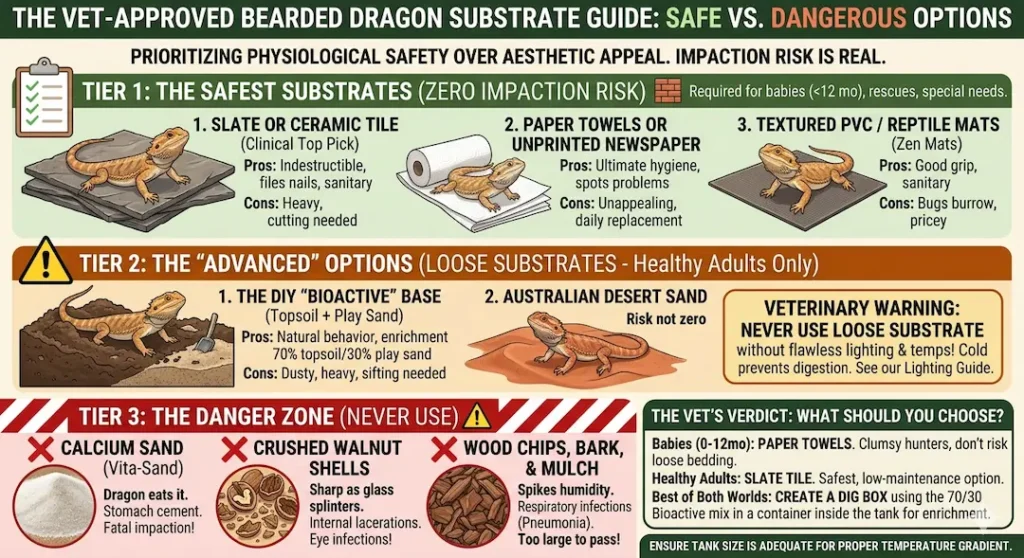
To help you navigate the pet store aisles safely, I have categorized the most common substrates into three definitive tiers: The Safest, The Advanced, and The Danger Zone.
Improper terrarium parameters can quickly suppress your reptile's immune system. It is vital to monitor their behavior daily and know how to spot the primary signs your bearded dragon is sick before a minor husbandry issue becomes a clinical emergency.
Tier 1: The Safest Substrates (Zero Impaction Risk) 🧱
If you want zero risk of bowel obstruction, ease of sanitization, and peace of mind, solid substrates are the gold standard. These are strictly required for babies (under 12 months), rescues, and dragons with special medical needs.
1. Slate or Ceramic Tile (The Clinical Top Pick)
Skip the pet store and head to your local hardware store (like Home Depot or Lowe's) for rough, slate-textured tiles.
- The Pros: They are virtually indestructible, conduct belly heat beautifully, naturally file down your dragon's sharp nails, and can be sanitized in minutes.
- The Cons: They are heavy and require precise cutting to fit the exact dimensions of your glass enclosure.
2. Paper Towels or Unprinted Newspaper
- The Pros: This is the ultimate hygienic option. It allows you to immediately spot blood, abnormal urates, or parasites in their stool. It is the mandatory choice for quarantine setups and clumsy juvenile hunters.
- The Cons: Aesthetically unappealing and requires daily replacement when soiled.
3. Textured PVC / Reptile Mats (Zen Mats)
These are dense, rubberized mats specifically manufactured for reptile enclosures, distinct from cheap "reptile carpet" which traps bacteria and snags nails.
- The Pros: Excellent grip for their joints, easily wiped down with veterinary disinfectants, and custom-cut to standard tank sizes.
- The Cons: Feeder insects (like roaches) can occasionally burrow underneath the edges.
Tier 2: The "Advanced" Options (Loose Substrates)
In the wild, Pogona vitticeps lives on compacted clay, soil, and sand. It is possible to safely mimic this environment, but only for healthy adult dragons living in enclosures with flawless temperature gradients.
Reptiles are ectothermic. If their basking spot is not hot enough, their bodies cannot produce the digestive enzymes required to pass accidentally ingested soil, turning a natural substrate into a deadly blockage.
1. The DIY "Bioactive" Base (Topsoil + Play Sand)
The most scientifically sound loose substrate is a home-mixed blend of 70% organic, fertilizer-free topsoil and 30% washed children’s play sand.
- The Pros: Allows for natural burrowing and digging behaviors, which provides excellent mental enrichment.
- The Cons: It is heavy, dusty when dry, and requires daily "spot cleaning" (sifting out feces) to prevent bacterial blooms.
2. Australian Desert Sand
High-end brands (like Jurassic Natural) harvest sand directly from the dragon's natural habitat. Because it is fine and lacks chemical binders, it is significantly safer than generic pet store sand—but the risk of impaction is never truly zero.
Veterinary Warning: Never use loose substrate unless you have meticulously audited your setup using our Bearded Dragon Lighting and Heat Guide: UVB, Temperatures, and Lamps.
Tier 3: The Danger Zone (Never Use) ⚠️
These substrates line the shelves of almost every major pet retailer. They are actively dangerous, misleadingly marketed, and responsible for countless emergency vet visits. Avoid them completely.
❌ Calcium Sand (Vita-Sand)
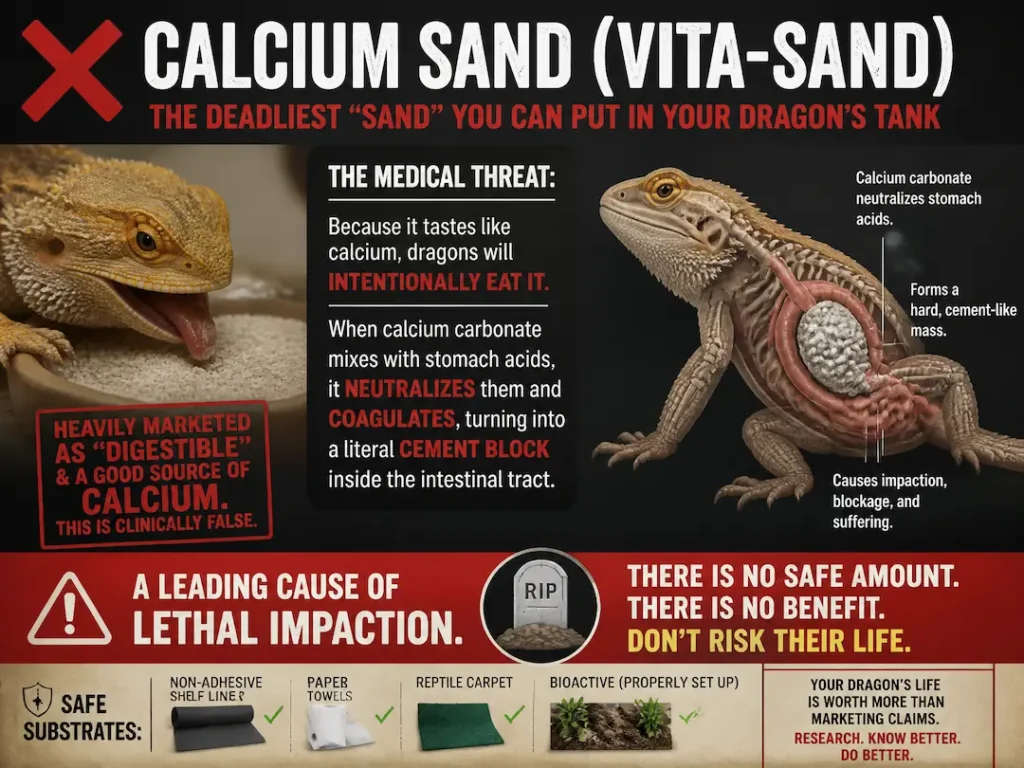
This is arguably the most dangerous product on the market. It is heavily marketed as "digestible" and a good source of calcium. This is clinically false.
- The Medical Threat: Because it tastes like calcium, dragons will intentionally eat it. When calcium carbonate mixes with stomach acids, it neutralizes them and coagulates, turning into a literal cement block inside the intestinal tract. It is a leading cause of fatal impaction. If you suspect your reptile has been ingesting their bedding, monitor their enclosure closely and compare their bowel movements to our bearded dragon poop chart to spot dangerous blockages before it's too late.
❌ Crushed Walnut Shells
- The Medical Threat: Walnut shells do not break down in a reptile's digestive tract. Under a microscope, the crushed edges are as sharp as glass splinters. If swallowed during a hunt, they can cause severe internal lacerations and bleeding. Furthermore, the dust is known to cause severe ocular (eye) infections.
❌ Wood Chips, Bark, and Mulch
- The Medical Threat: These hold immense amounts of moisture, drastically spiking the humidity of your arid terrarium. This directly causes bacterial respiratory infections (pneumonia). Additionally, the wood chunks are far too large to pass if accidentally swallowed.
The Vet's Verdict: What Should You Choose?
- For Babies and Juveniles (0-12 Months): Use paper towels. Young dragons are clumsy hunters who bite the floor every time they lunge for a cricket. Do not risk their lives with loose bedding.
- For Healthy Adults: Slate tile is the safest, most sanitary, low-maintenance option.
- The Best of Both Worlds: If you are an experienced keeper who uses slate tile but still wants to encourage natural digging behavior, create a "Dig Box." Fill a small, shallow plastic container with the 70/30 organic topsoil mix and place it inside the tank.
Frequently Asked Questions About Bearded Dragon Substrates
What is the absolute safest substrate for a bearded dragon?
The safest substrates are solid, non-particle options like rough slate tile, ceramic tile, or paper towels. These carry a zero percent risk of gastrointestinal impaction and are the easiest to sanitize.
Why is calcium sand bad for bearded dragons?
Calcium sand encourages intentional ingestion because the reptile tastes the calcium. Once inside the stomach, the calcium carbonate neutralizes stomach acid and binds together, creating a hard, cement-like blockage that is frequently fatal.
Can I use play sand for my bearded dragon?
Yes, but only for healthy adult dragons with perfect basking temperatures. Washed children's play sand should ideally be mixed with organic, fertilizer-free topsoil (a 30% sand to 70% soil ratio) rather than used alone.
Is reptile carpet safe for bearded dragons?
Standard felt or mesh reptile carpet is not recommended. It is notorious for snagging and ripping out bearded dragon nails, and its porous material acts as a breeding ground for bacterial growth from feces.
Now that your flooring is safe and clinically sound, you must ensure the enclosure itself is large enough to support a proper temperature gradient. Read our complete guide on Tank Size Requirements to ensure your dragon's home is structurally adequate.
0 Comments