

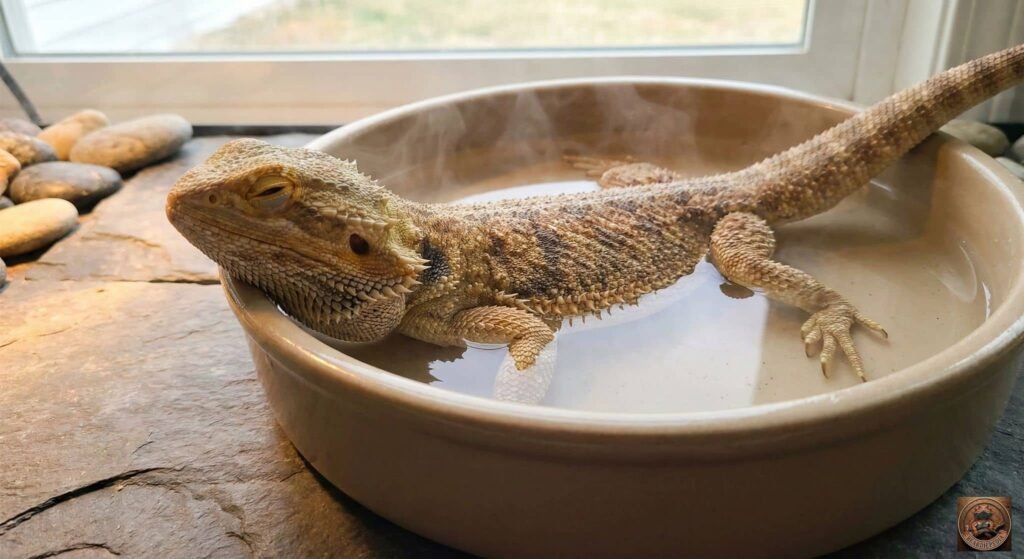
For some bearded dragons, bath time is a relaxing spa day. For others, it’s a terrifying ordeal. Regardless of your pet's opinion, regular baths are a necessary part of their care routine.
Unlike dogs, we don't bathe dragons just to clean them. As mentioned in our Shedding Guide, warm water is the best tool to help stuck skin peel off safely. It also encourages hydration (many dragons drink while bathing) and helps relieve constipation.
But lizards aren't Olympic swimmers. This guide covers the correct temperature, depth, and safety rules to ensure bath time doesn't turn dangerous.
How Often Should You Bathe Them?
- Adults: Once a week is usually sufficient to keep them hydrated and clean.
- During Shedding: Increase to 2-3 times a week to help loosen the skin.
- Babies: A quick soak once a week helps, but be extra careful with water depth.
Step 1: Preparation & Temperature (Critical)
You can use your bathtub, a sink, or a plastic storage bin. Just make sure it is thoroughly rinsed of any chemical cleaners before putting your dragon in.
The Golden Number: 85°F – 100°F (29°C – 37°C)
- Too Cold (< 80°F): Your dragon's metabolism will slow down, and they could get a chill.
- Too Hot (> 105°F): You risk burning their skin or causing heat stroke.
Use a Tool: Don't guess by touching the water with your hand. Our skin is less sensitive than theirs. Use your Digital Temp Gun or a bath thermometer to verify the water is lukewarm, like a bath for a human baby.
Step 2: The Water Depth
Bearded dragons can drown in just a few inches of water if they panic or inhale water.
- The Rule: Fill the water only up to their shoulders (where the front legs meet the body).
- Support: Ideally, place a rock or a folded towel in the tub so they have a "dry island" to climb onto if they get tired.
Step 3: The Bath
Gently lower your dragon into the water.
- Hydration: Drip some water on their snout. They might start lapping it up. This is great for their kidneys.
- Cleaning: Use a soft-bristled toothbrush to gently scrub their scales, feet, and tail. This removes dirt and dead skin.
- The "Poop" Factor: Warm water relaxes their muscles. There is a 90% chance your dragon will poop in the bath. If they do, remove the dragon immediately, drain the water, sanitize the tub, and start over if they still need cleaning.
Warning: Never use soap or shampoo unless prescribed by a vet. Chemicals can irritate their skin and are toxic if swallowed.
Step 4: Drying Off
This step is often skipped, but it is vital. When you take them out, wrap them in a soft towel and pat them completely dry. Do not put a wet dragon back into the tank.
- If they are wet and go under the basking lamp, the water can get too hot (like boiling).
- If they go to the cool side while wet, they can get too cold and develop a respiratory infection.
Troubleshooting: What if They Drink the Water?
It is normal for them to drink bathwater. However, try to prevent them from drinking after they have pooped in it. Also, ensure they don't submerge their head completely. If they inhale water, they can develop aspiration pneumonia (listen for clicking sounds when breathing later).
Summary checklist
- Temp: 90°F - 100°F.
- Depth: Shoulder height.
- Supervision: NEVER leave them alone, not even for a minute.
- Dry: Pat dry before returning to the tank.
While you have your dragon securely wrapped in a towel after a bath, it is the perfect time for a manicure. Read our guide on How to Trim Bearded Dragon Nails to stop them from scratching you.
Frequently Asked Questions About Bathing Bearded Dragons
How often should I bathe my bearded dragon?
For adult bearded dragons, once a week is usually sufficient to maintain hydration and cleanliness. During shedding, increase baths to 2-3 times weekly to help loosen stuck skin. Babies can have a quick soak once a week, but require extra caution with water depth. If your dragon is constipated, warm baths can help stimulate bowel movements. Always adjust frequency based on your dragon's individual needs.
What temperature should bearded dragon bath water be?
The ideal water temperature for a bearded dragon bath is between 85°F and 100°F (29°C to 37°C). Water below 80°F can slow their metabolism and cause chilling. Water above 105°F risks burning their skin or causing heat stroke. Never guess the temperature with your hand—use a digital temperature gun or bath thermometer to verify, as human skin is less sensitive than theirs. Aim for lukewarm water like you'd use for a human baby.
How much water should I put in my bearded dragon's bath?
Fill the water only up to your bearded dragon's shoulders—where the front legs meet the body. Bearded dragons can drown in just a few inches of water if they panic or inhale water. For added safety, place a rock or folded towel in the tub to create a "dry island" they can climb onto if they get tired. Never leave them unattended, regardless of water depth.
Can I use soap to wash my bearded dragon?
Never use soap, shampoo, or any cleaning products on your bearded dragon unless specifically prescribed by a veterinarian. Chemicals in soaps can irritate their sensitive skin and are toxic if swallowed. Plain warm water is all you need. For stubborn dirt or stuck shed, use a soft-bristled toothbrush gently scrub their scales, feet, and tail without any soap.
Why does my bearded dragon poop in the bath?
Warm water relaxes their muscles, including the muscles that control bowel movements. There's about a 90% chance your dragon will poop during a bath—this is completely normal and actually helpful if they're constipated. If they do poop, immediately remove your dragon, drain the water, thoroughly sanitize the tub, and refill with clean water if they still need cleaning. Never let them soak in soiled water.
Is it safe for my bearded dragon to drink bath water?
Yes, it's normal and healthy for bearded dragons to drink during baths—it helps with hydration. However, prevent them from drinking after they've pooped in the water. Also, ensure they don't submerge their head completely. If they inhale water into their lungs, they can develop aspiration pneumonia. Watch for clicking sounds when breathing after baths, which could indicate water in the lungs and requires veterinary attention.
Do I need to dry my bearded dragon after a bath?
Yes, drying your bearded dragon after a bath is essential. Wrap them in a soft towel and pat them completely dry before returning them to their enclosure. If you put a wet dragon under the basking lamp, the water can heat up too much and potentially burn them. If they go to the cool side while wet, they can become chilled and develop a respiratory infection. Never skip this step.
Can bearded dragons drown in the bath?
Yes, bearded dragons can drown in just a few inches of water if they panic, tire out, or accidentally inhale water. This is why constant supervision is absolutely mandatory—never leave your dragon alone in the bath, even for a minute. Always keep water at shoulder level, provide a climbing rock or towel for them to rest on, and watch for signs of distress like frantic paddling or attempts to escape.
Do baths help bearded dragons with shedding?
Yes, warm baths are one of the best tools for helping bearded dragons shed. The warm water loosens stuck skin and makes it easier to peel off safely. During shedding periods, increase baths to 2-3 times weekly. After the bath, you can gently rub the loose skin with a soft toothbrush to help it come off—but never pull at stuck shed, as this can damage the new skin underneath.
My bearded dragon hates baths—what should I do?
Some dragons genuinely dislike baths. Start with shallower water (just enough to wet their belly) and keep sessions very short—5 minutes maximum. Use a towel or rock for them to grip, as slipping can increase stress. Try slightly warmer water (within the safe 85-100°F range) as some dragons prefer it. Drip water on their snout gently rather than forcing them to submerge. With patience, most dragons eventually tolerate or even enjoy bath time.
0 Comments