

Bearded dragons are surprisingly communicative. They don't bark or meow, but they have a complex vocabulary of gestures, postures, and color changes.
For a new owner, this can be confusing. Is he waving at me? Why is he nodding his head like he’s listening to heavy metal?
Understanding the body language of the bearded dragon is crucial for your dragon's health and well-being. A dragon that constantly shows signs of stress is a dragon that could become ill. As part of our commitment to your pet's well-being (described in our Health and Wellness Center), this guide translates the language of lizards into simple terms.
1. Head Bobbing (The "Boss" Move)
This is the most iconic bearded dragon move. It involves the dragon jerking its head up and down.
- Fast, Jerky Bobbing: This is a sign of dominance. Males do this to tell other males "I am the boss here" or to impress females.
- Slow Nodding: Females (and submissive males) often do a slower nod to acknowledge a dominant dragon.
- What to do: If your dragon bobs at you, he might just be feeling territorial. It's usually harmless, but don't bob back at him—it might confuse or stress him!
2. Arm Waving (The "I Surrender" Move)
This looks exactly like a human waving "hello." The dragon lifts one front leg and slowly rotates it in a circle.
- The Meaning: This is a sign of submission. It literally means: "I see you, you are big and scary, please don't hurt me."
- Who does it: Commonly seen in babies, juveniles, and females.
- Context: If your dragon waves at you, they are acknowledging you are the giant predator in the room. It means they are not a threat.
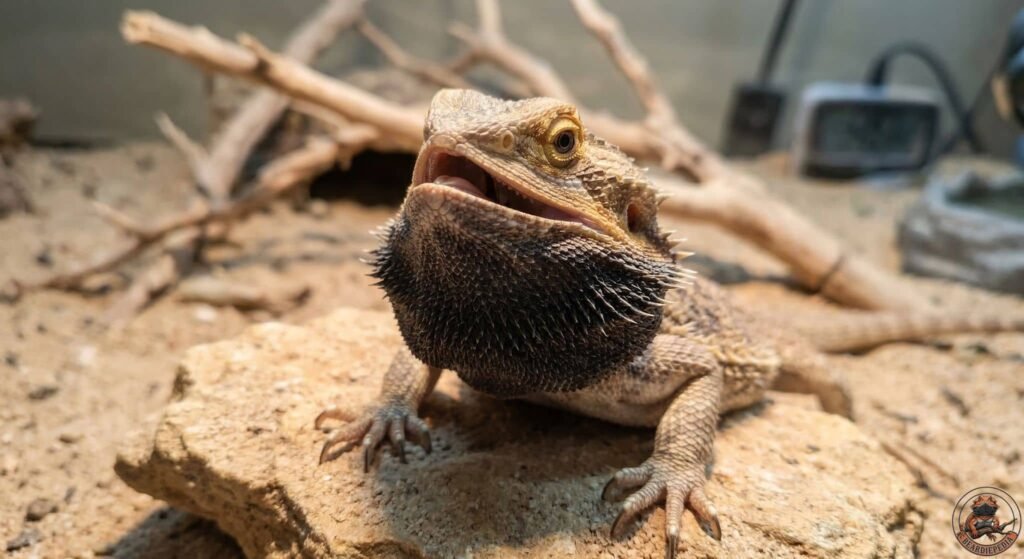
3. The Black Beard (Stress or Hormones)
When the skin under their neck turns jet black and puffs out.
- In the Morning: They might darken to absorb heat (normal).
- If Bobbing: Males get black beards when they see a female (hormonal/mating).
- If he's lethargic/hiding: DANGER. A black beard that stays black all day, accompanied by hiding or not eating, is a sign of intense pain or distress. Consult our guide on signs of illness.
A black beard is a clear behavioral sign of distress, but stress can also manifest physically on your dragon's belly. If you notice dark, oval patterns appearing underneath them, read our full guide on why bearded dragon stress marks appear and how to fix them.
4. Glass Surfing (Frantic Scratching)
This is when the dragon stands on its hind legs and frantically scratches at the glass walls of the tank.
- The Meaning: "I want to get out of here!"
- The Cause: This is almost always a sign of stress.
- Tank is too small: They feel cramped. (See: Why a 40-Gallon Tank Isn't Enough).
- Reflection: They see their reflection in the glass and think it's a rival.
- Needs to Poop: Some dragons hate pooping in their "house" and surf to be let out to do their business.
5. Gaping (Mouth Open)
You look into the tank and your dragon is sitting under the heat lamp with its mouth wide open, like a smiling dog.
- The Meaning: This is called Thermoregulation. They are venting excess heat. It is a sign that they are at the perfect basking temperature.
- The Exception: If they are gaping while on the cool side of the tank, or if they are making coughing/clicking noises, this is a respiratory infection.
6. Tail Curling (The Scorpion)
When the tail curls up over their back like a scorpion.
- The Meaning: High alert. They are usually hunting a cricket, or they feel threatened and are ready to react. It shows focus and energy.
Summary: Is My Dragon Happy?
A happy dragon is alert, has bright eyes, eats well, and spends time basking.
- Good signs: Gaping while basking, slow exploration, sleeping peacefully.
- Bad signs: Constant glass surfing, permanent black beard, or lethargy.
Understanding behavior is the first step in detecting health problems. If you notice any of these stressful behaviors persisting, check for a medical issue by reading our guide on 7 signs your bearded dragon is sick.
Frequently Asked Questions About Bearded Dragon Behavior
Why is my bearded dragon bobbing its head?
Head bobbing is a territorial or dominant behavior. Fast, jerky bobs mean "I am the boss," usually done by males. Slow nodding is often done by females or submissive dragons to acknowledge dominance.
What does it mean when a bearded dragon waves its arm?
Arm waving is a sign of submission. It means the dragon sees you (or another dragon) as bigger and is communicating that they are not a threat. It is most commonly seen in babies, juveniles, and females.
Why is my bearded dragon scratching at the glass (glass surfing)?
Glass surfing is almost always a sign of stress. The most common causes are a tank that is too small, feeling threatened by their own reflection, or simply wanting to get out to poop.
Why does my bearded dragon have a black beard?
A black beard can happen in the morning to absorb heat, or due to mating hormones. However, if it stays black all day and the dragon is hiding or lethargic, it is a sign of intense distress or illness.
0 Comments