

If you share your life with a beardie, keeping them happy and healthy is your top priority. One of the most critical—and often misunderstood—parts of their diet is supplementation. Choosing the right calcium supplement bearded dragon can mean the difference between an energetic reptile and one prone to severe illnesses.
In this article, you'll discover the importance of calcium, the exact dosages based on your pet's age, and the foolproof method for administering it. Keep reading to master your dragon's nutrition and ensure a long, thriving life.
Why do bearded dragons need calcium?
In their natural habitat, bearded dragons get all the calcium they need through a highly varied diet and constant exposure to direct sunlight. In captivity, it's our responsibility to replicate this balance.
Without an adequate supply of calcium bearded dragon, your pet will resort to pulling calcium from its own bones to keep its muscles and organs functioning. This triggers the dreaded Metabolic Bone Disease (MBD), which causes deformities, paralysis, and, in severe cases, death.
For a deeper dive into the veterinary science behind this condition, often referred to technically as Nutritional Secondary Hyperparathyroidism, we highly recommend reading the VETzInsight article on Nutritional Secondary Hyperparathyroidism in Reptiles."The most common form of metabolic bone disease seen in captive reptiles and amphibians is nutritional secondary hyperparathyroidism (NSHP). NSHP is caused by not eating enough calcium or having too much phosphorus in the diet and/or a lack of vitamin D3, and inadequate exposure to ultraviolet (UVB) light."> — VetzInsight (educational veterinary blog)
How much calcium do bearded dragons need?
The amount of calcium varies drastically depending on your reptile's life stage. Babies and juveniles are undergoing rapid bone growth and require almost daily supplementation, while adults only need regular maintenance.
Below is a summary table so you know exactly how to administer it:
Comparative Table: Supplementation Frequency by Age
| Dragon Stage | Age | Calcium Frequency | Multivitamin Frequency |
| Babies | 0 - 2 months | 1 meal a day (5 days a week) | 2 days a week |
| Juveniles | 2 - 6 months | 1 meal a day (4-5 days a week) | 2 days a week |
| Sub-adults | 6 - 12 months | 1 meal a day (3 days a week) | 1 to 2 days a week |
| Adults | 12+ months | 1 meal a day (2 to 3 days a week) | 1 day a week |
Calcium & Vitamins: The Dusting Schedule You Need
To avoid confusion, the best approach is to create a set routine. A classic dusting schedule for a juvenile would be:
- Monday through Friday: Dust insects with calcium.
- Weekends: Dust with vitamins.
- Important note: Never mix calcium and vitamins in the same meal, as they can interfere with each other's absorption.
How to give bearded dragon calcium effectively
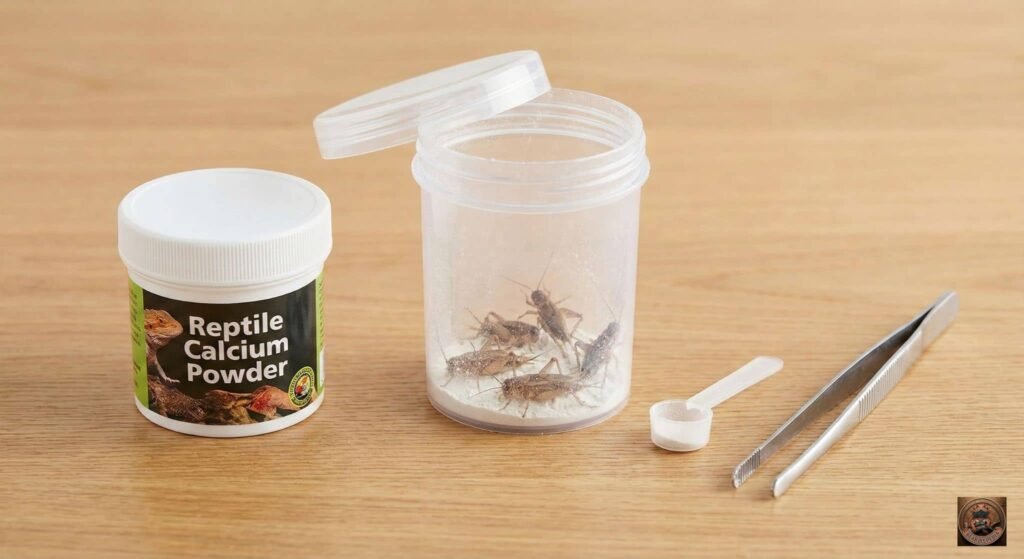
Knowing how to give bearded dragon calcium is just as important as buying the right product. The most effective method used by breeders is dusting.
Follow these simple steps:
- Use a bag or container: Place the live feeder insects (crickets, dubia roaches, or worms) in a small plastic bag or a cylindrical container.
- Add the powder: Add a pinch of calcium for bearded dragon powder. You don't need them to look like white "ghosts"; a very fine, translucent coating is enough.
- Shake gently: Shake the container so the insects are evenly coated with the supplement.
- Serve immediately: Offer the insects to your dragon before they clean the powder off themselves.
- On salads: You can also sprinkle a small pinch over their dark leafy greens a couple of times a week, especially if your dragon is an adult and eats more veggies than insects.
Calcium for bearded dragon with or without D3?
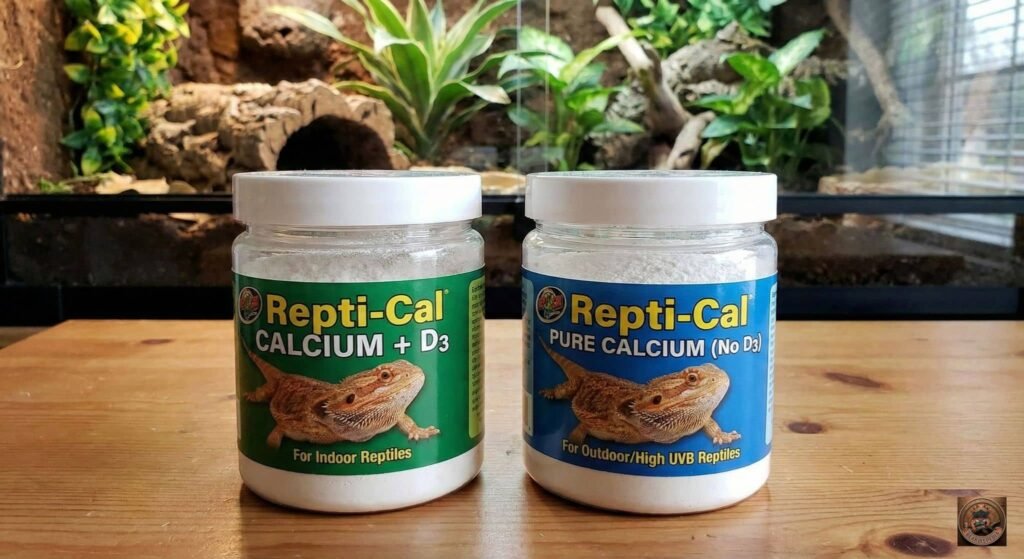
This is the great dilemma. Vitamin D3 is essential for the dragon's body to absorb calcium.
- If you use high-quality UVB tubes (like 10% to 14% T5 tubes), your dragon will synthesize its own D3. Use calcium WITHOUT D3 most of the time, and with D3 only a couple of times a month.
- If the UVB lighting is weaker or irregular, you will need a calcium WITH D3 more frequently to compensate for that deficiency.
Frequently Asked Questions (FAQ)
Can I give my bearded dragon too much calcium?
Yes. Although less common than a deficiency, an excess of calcium (hypercalcemia) or vitamin D3 can lead to the calcification of their internal organs. Always stick to the recommended frequencies in the table above.
Can you leave a bowl of calcium in the tank?
This is not recommended for bearded dragons (unlike leopard geckos). They might ingest too much at once. It's better to control the dosage by dusting their food directly.
Conclusion
Proper use of a calcium supplement bearded dragon is your best tool to ensure your reptile grows strong, active, and free of bone diseases. Remember to adjust the dosage according to their age, maintain optimal UVB lighting, and be consistent with your dusting schedule.
Do you have questions about which UVB lights to pair with your calcium? Leave us a comment below or explore our guide on the ideal terrarium setup for bearded dragons!
0 Comments