

Let’s be honest: if you own a bearded dragon, you probably spend a weird amount of time looking at their poop. And you should!
In the wild, dragons are masters at hiding illness. They will act "tough" until they literally collapse. This is a survival instinct to avoid looking weak to predators. Because of this, their feces are often the very first (and sometimes only) warning sign that something is wrong.
A healthy dragon’s gut is a complex engine dependent on heat, hydration, and diet. When one gear slips, the evidence shows up in the tank.
Here is your definitive guide to decoding the mess.
The Baseline: What Does "Healthy" Look Like?
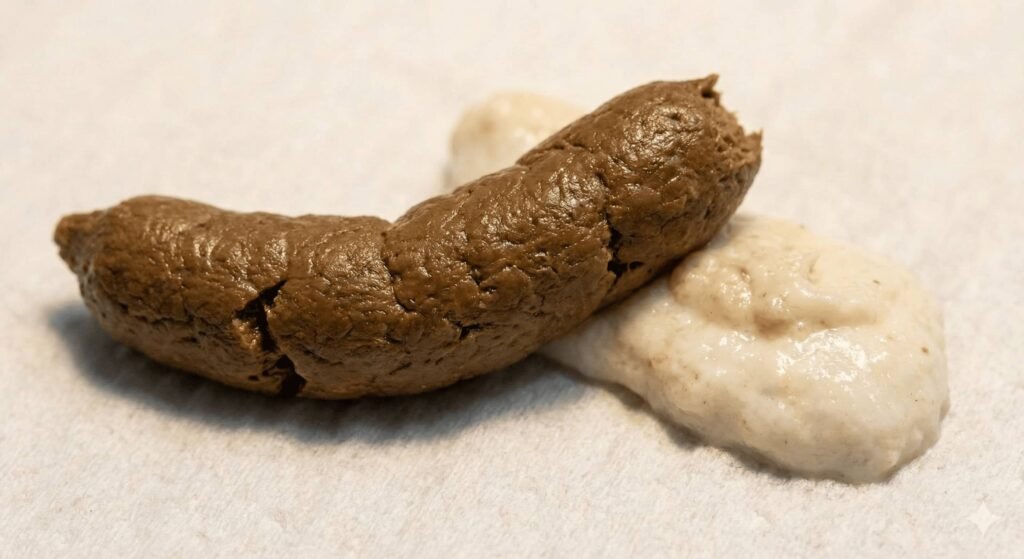
Before we panic about weird colors, we need to know what a "perfect" bowel movement looks like. A standard bearded dragon poop has two distinct parts:
- The Fecal Log (Poop): Brown to dark brown, firm (like a soft log), and well-formed. It shouldn't be rock hard, nor should it be a puddle.
- The Urate (Pee): Reptiles don't urinate liquid like mammals. They conserve water by passing uric acid as a white, chalky solid. This should be soft and white (or slightly off-white) and attached to the poop.
✅ The Verdict: If it looks like a brown log with a white tip, your husbandry is likely on point.
The Poop Chart: Diagnosing Abnormalities
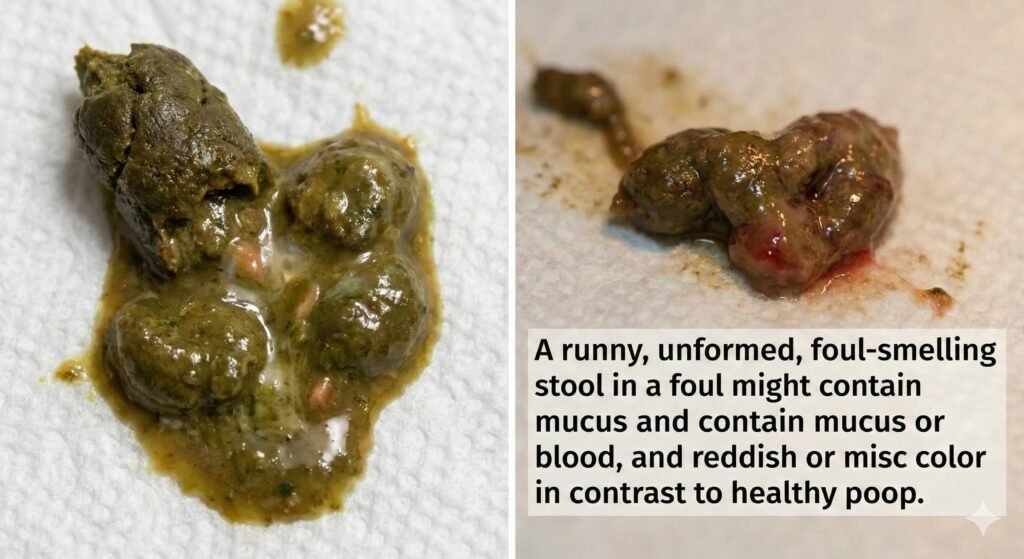
✅ Normal / Healthy
Brown, firm log with soft white urate tip. Not too hard, not too wet. Good job!
⚠️ Runny & Smelly
Diarrhea with foul odor usually means Parasites (Coccidia). Needs a Vet check.
⚠️ Hard & Dry
Looks like a stone or crumbles. Sign of Dehydration. Increase water and baths.
❄️ Undigested Bugs
Whole insects visible. Usually means Basking Temps are too low. Check your heat lamp.
🚨 Red / Bloody
Did they eat berries? If not, this is an emergency (Internal bleeding or parasites).
⚠️ Yellow Urates
Too much Calcium or mild dehydration. Adjust supplements and water intake.
If things don't look right, find the symptom below.
1. Runny, Watery, or "Explosive" Poop
The Cause: Parasites or Overhydration. The Fix: If you recently fed them hornworms, cucumber, or lots of zucchini, this might just be temporary overhydration. Wait 24 hours. However, if the smell is unbearably foul (room-clearing stench) and it happens consistently, this is the classic sign of Parasites (usually Coccidia or Pinworms).
- Action: You need a fecal float test at the vet. Do not ignore this; parasites steal nutrients and stunt growth.
2. Hard, Dry, or "Crumbly" Poop
The Cause: Dehydration. The Fix: Your dragon is not getting enough water. Gut impaction could be next if you don't fix this.
- Action: Increase hydration immediately. Use a syringe to drip water on their nose, offer more "wet" veggies (like squash), and give them a warm soak (bath) for 15 minutes.
3. Red or Bloody Stool
The Cause: Panic vs. Danger. The Fix: First, breathe. Did you feed them raspberries, beets, or red peppers recently? If yes, it’s likely just food dye. If not, bright red blood can indicate a tear near the vent (from passing a large egg or hard poop), or severe parasites. Dark, tar-like blood indicates internal bleeding.
- Action: If no red foods were eaten, this is a Vet Emergency. Do not wait to see if it improves. While you prepare for your appointment, check our guide on the 7 Signs Your Bearded Dragon Is Sick (And When to See a Vet) to see if your dragon is showing other subtle symptoms—like a black beard or lethargy—so you can give your exotic vet the complete picture.
4. Yellow or Orange Urates
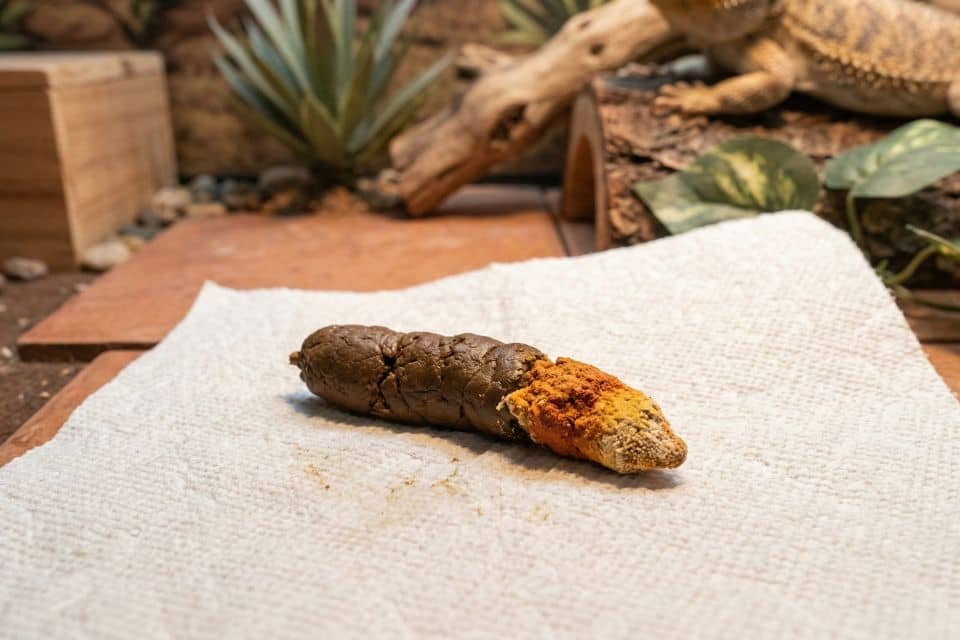
The Cause: Dehydration, Excess Supplements, or Diet. The Fix: The urate (the pee) should be soft and white. When it changes color, it's usually a warning sign about their fluid intake or vitamin schedule:
- Light Yellow: Mild dehydration or slightly too much calcium.
- Bright Orange / Dark Yellow: Severe dehydration or too much Vitamin A. The urates might feel hard, chalky, or gritty, which can make it painful to pass and lead to constipation or impaction.
- Pinkish Tint: Can sometimes be mistaken for orange, but a true pink tint can indicate mild digestive irritation or a heavy parasite load.
Action: First, push fluids immediately. Give your dragon a 15-20 minute warm soak (bath), use a syringe or dropper to drip water onto their snout so they lick it off, and temporarily offer water-rich veggies (like a small amount of cucumber or hornworms). Second, review your dusting schedule to ensure you aren't overdoing the calcium or multivitamins.
5. Undigested Insects (Whole bugs in poop)
The Cause: Low Basking Temperatures. The Fix: This is almost never a problem with the bug itself. Bearded dragons need high heat (100°F - 110°F / 38°C - 43°C) to activate their digestive enzymes. If their basking spot is too cool, the food simply rots in their stomach or passes through whole.
- Action: Check your temps with a digital probe thermometer (stick-on analogs are inaccurate). Ensure they have 2 hours of heat after their last meal before lights out.
6. Green Poop
The Cause: Diet (Normal) or Liver (Rare). The Fix: If you feed mostly greens (collards, mustard greens), the poop will naturally be tinted green. This is normal. If the poop is neon/bile green and slimy, and they aren't eating, it could indicate a liver issue or anorexia.
The Bottom Line
Poop is gross, but it's also your best diagnostic tool.
- Healthy: Brown log, soft white urate.
- Parasites: Watery, ungodly smell.
- Cold Tank: Undigested bugs.
- Dehydration: Hard, dry stones.
Keep an eye on the cleanup routine, and you’ll catch health issues weeks before they become life-threatening.
0 Comments