
Bearded Dragon Health Center
Reptiles are masters at hiding illness. Reptiles are masters at hiding illness. By the time a bearded dragon looks visibly sick, it has often been unwell for days or even weeks.
As an owner, you are your dragon’s first line of defense. This health hub will help you recognize early warning signs, understand common diseases, and know exactly when to seek veterinary care.
Emergency Signs (Vet Required Immediately)
If your bearded dragon shows any of the following symptoms, contact an experienced exotic vet immediately:
- Gasping or open-mouth breathing
- Vomiting or regurgitation
- Sunken or severely swollen eyes
- Extreme lethargy or complete unresponsiveness
- Black beard combined with weakness
- Inability to stand or move normally
Do not rely on online advice in emergency situations — seek professional veterinary care immediately.
The Poop Chart & Diagnostics
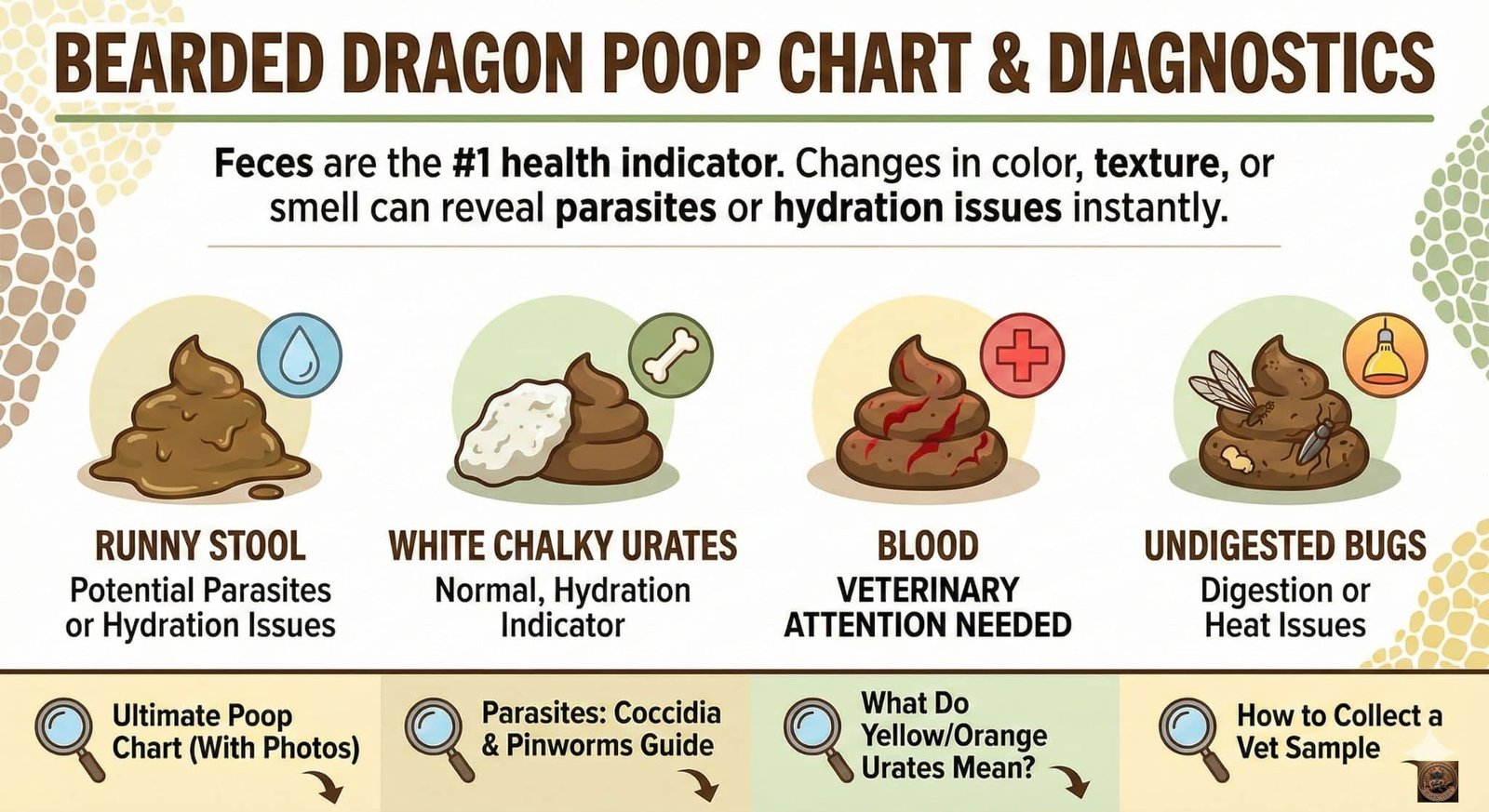
Feces are one of the most important health indicators in bearded dragons. Changes in color, texture, frequency, or smell can quickly reveal parasites, hydration problems, or digestive issues.
Watch for these warning signs:
- Runny or watery stool
- White, overly chalky urates (possible dehydration)
- Blood or mucus present
- Undigested insects in stool
- Extremely strong or foul odor
Helpful diagnostic guides:
- Ultimate Poop Chart (With Photos)
- Parasites: Coccidia & Pinworms Guide
- What Do Yellow/Orange Urates Mean?
- How to Collect a Vet Sample
Common Diseases & MBD
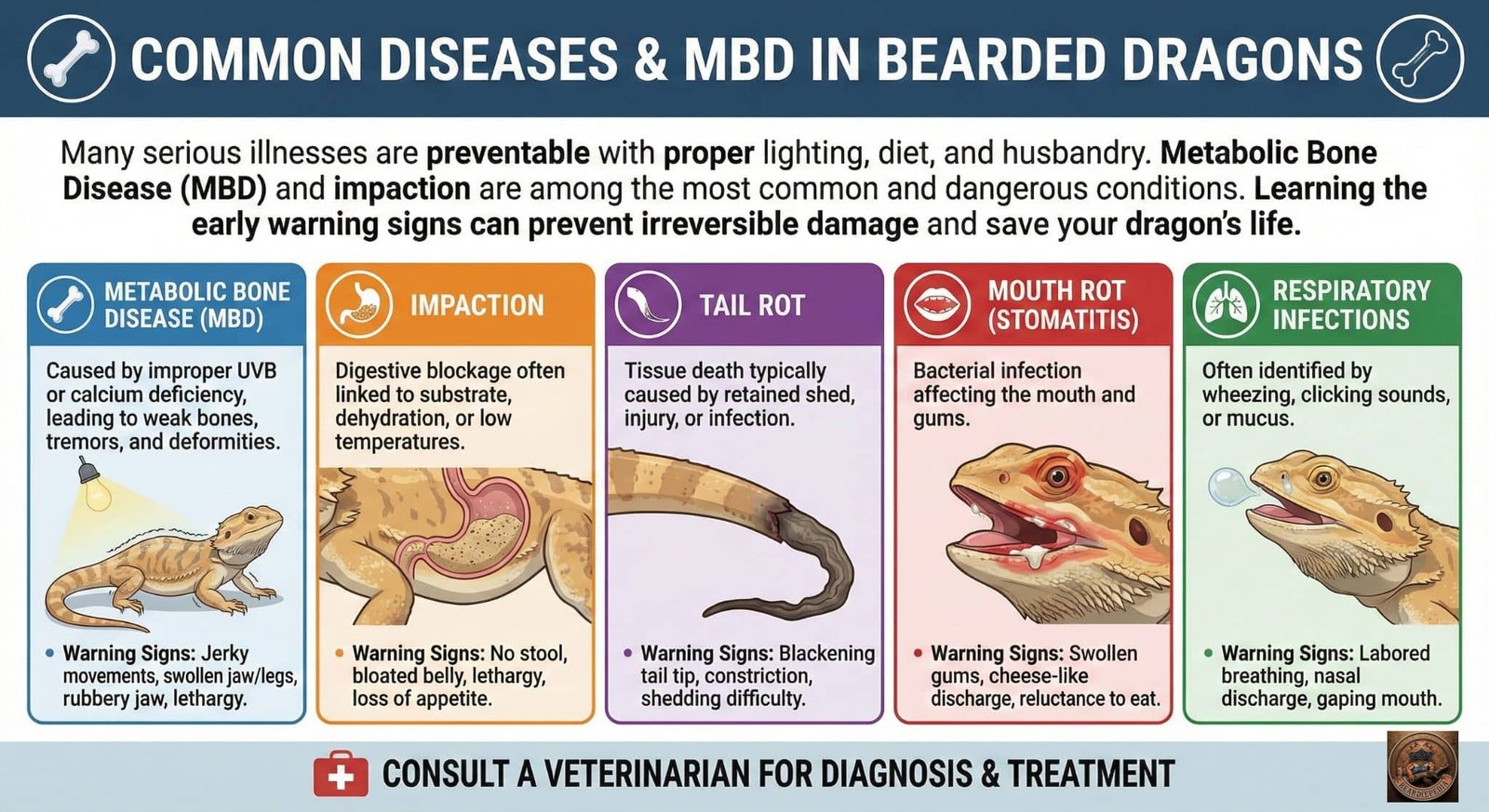
Many serious bearded dragon illnesses are preventable with proper lighting, diet, and husbandry. Metabolic Bone Disease (MBD) and impaction are among the most common and dangerous conditions. Learning the early warning signs can prevent irreversible damage and save your dragon’s life.
Most common health conditions:
- Metabolic Bone Disease (MBD): Caused by improper UVB or calcium deficiency, leading to weak bones, tremors, and deformities.
- Impaction: Digestive blockage often linked to substrate, dehydration, or low temperatures.
- Tail rot: Tissue death typically caused by retained shed, injury, or infection.
- Mouth rot (stomatitis): Bacterial infection affecting the mouth and gums.
- Respiratory infections: Often identified by wheezing, clicking sounds, or mucus.
Detailed health guides:
- MBD: Signs, Treatment & Prevention
- Impaction: Symptoms, First Aid & When to See a Vet
- Tail Rot: Identification & Treatment Options
- Mouth Rot (Stomatitis) Complete Guide
- Respiratory Infection Warning Signs
Symptom Checker
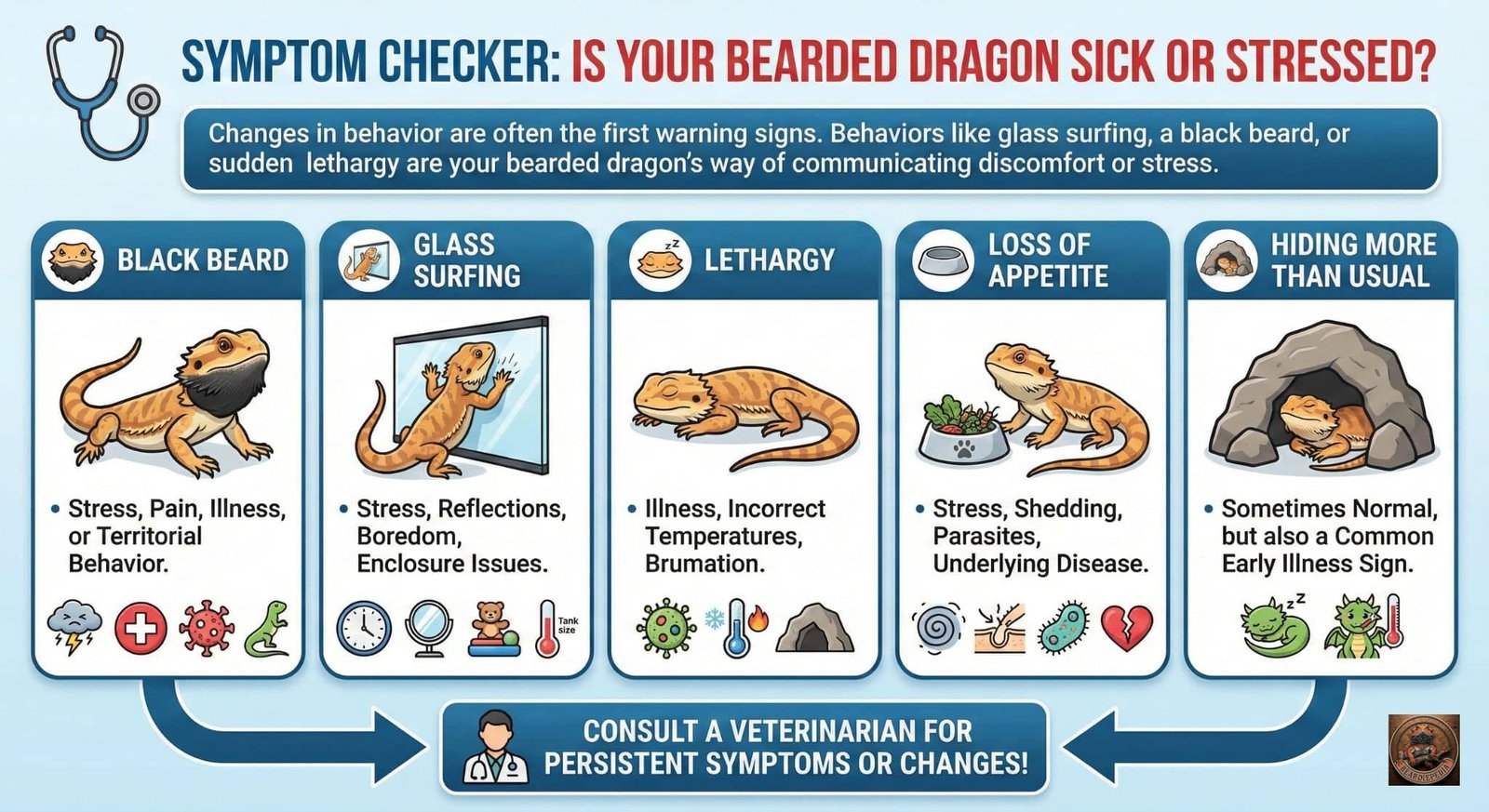
Is your dragon just shedding, stressed, or actually sick? Changes in behavior are often the first warning signs. Behaviors like glass surfing, a black beard, or sudden lethargy are your bearded dragon’s way of communicating discomfort or stress.
Common symptoms owners notice:
- Black beard: Can indicate stress, pain, illness, or territorial behavior.
- Glass surfing: Often linked to stress, reflections, boredom, or enclosure issues.
- Lethargy: Low energy may signal illness, incorrect temperatures, or brumation.
- Loss of appetite: Could be stress, shedding, parasites, or underlying disease.
- Hiding more than usual: Sometimes normal, but also a common early illness sign.
Learn what each symptom means:
- Why is My Dragon's Beard Black?
- Glass Surfing: Stress or Boredom?
- Brumation vs. Sickness: How to Tell the Difference
- Sunken or Bulging Eyes Explained
Prevention & Vet Care
An ounce of prevention is worth a pound of cure. Learn how to supplement correctly and find a qualified professional.