
Ultimate Bearded Dragon Habitat Setup Guide
Incorrect husbandry is the #1 killer of bearded dragons. Before you bring your new pet home, you must master the "Big Three": Space, Lighting, and Heat.
This complete guide covers everything from the 120-gallon rule to choosing a safe substrate that won't cause impaction.
The Enclosure (Tank Size)
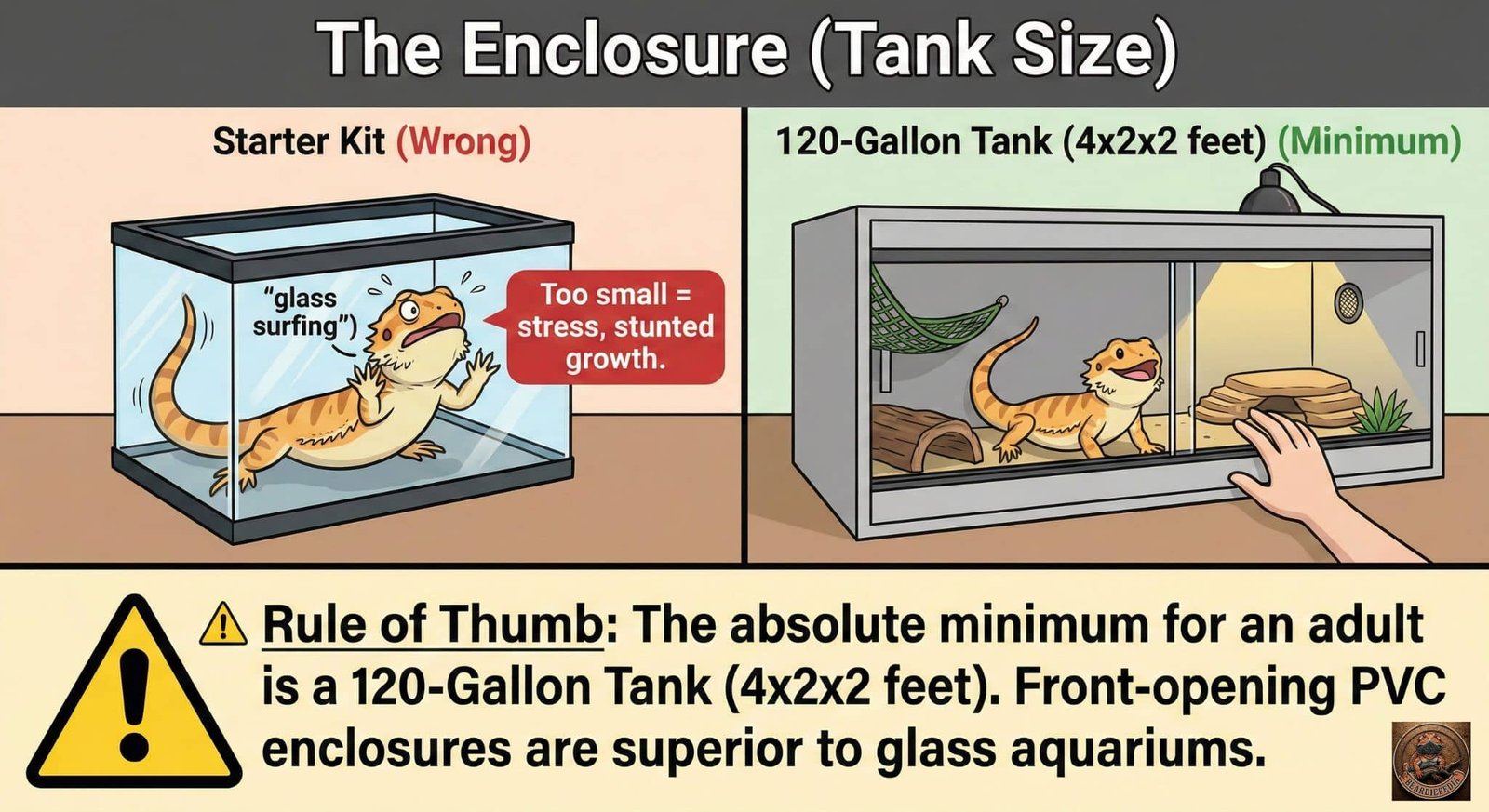
Forget the “starter kits.” Adult bearded dragons can grow up to 24 inches long and require significant floor space to stay healthy and active. Small tanks often lead to stress, glass surfing, poor thermoregulation, and even stunted growth.
⭐ Ideal Size Recommended by Modern Experts: Many reptile veterinarians and herpetologists now suggest larger enclosures for optimal welfare: 5 ft × 2 ft × 2 ft (approximately 150 gallons) >6 ft × 2 ft × 2 ft (approximately 180 gallons) = premium ideal for a full-grown adult Bigger enclosures provide better exercise, stronger muscle development, improved thermoregulation, and overall better long-term health.
- Best Tank Size Guide
- Glass vs. PVC: Which is Better?
- Why You Must Avoid "Starter Kits"
- DIY Enclosure Plans
Lighting & Heating (UVB)
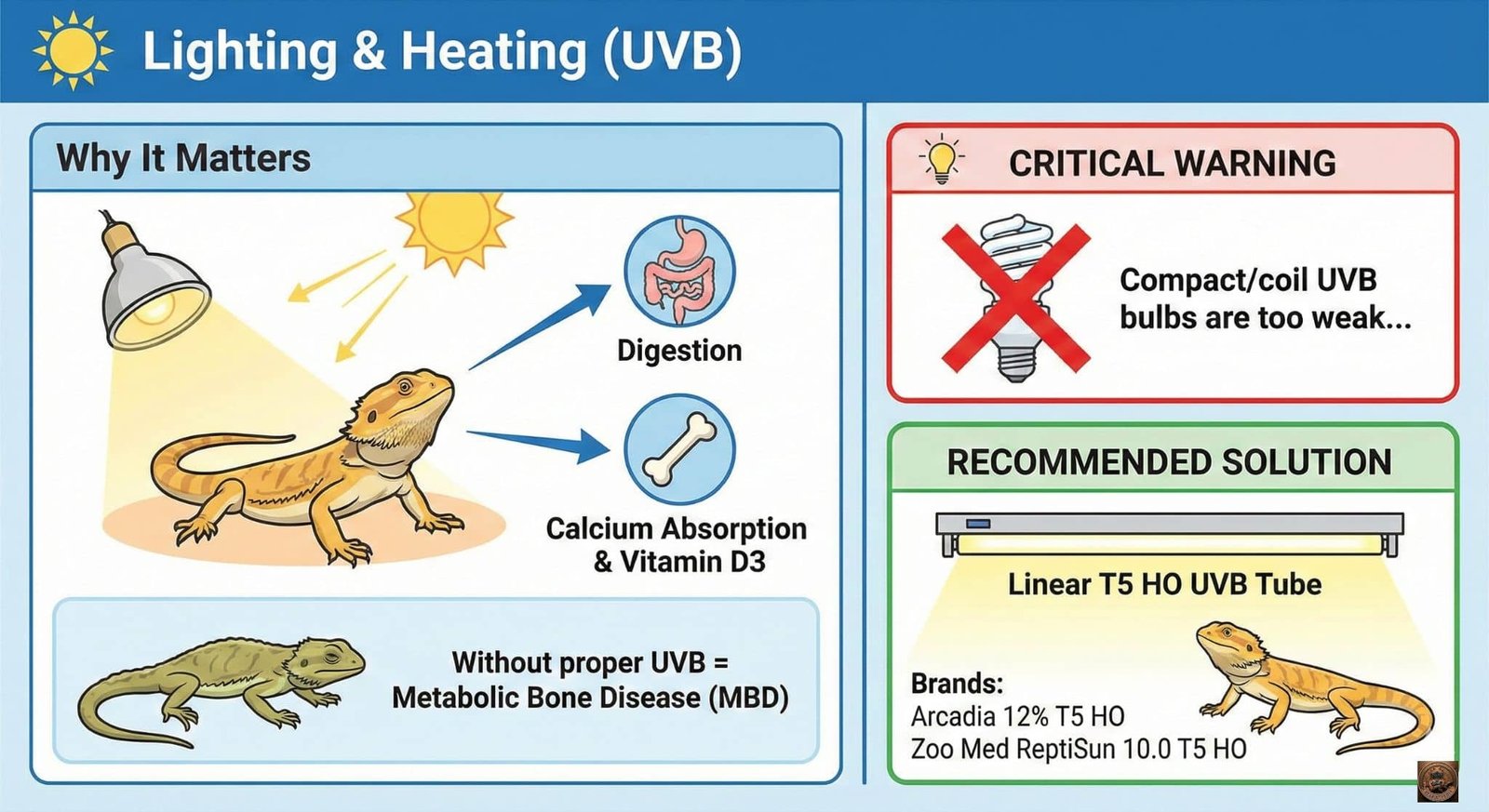
Bearded dragons are true sun-worshippers. They rely on external heat to properly digest food and require strong UVB exposure to synthesize vitamin D3 and absorb calcium. Without a proper temperature gradient and high-output UVB lighting, they can develop Metabolic Bone Disease (MBD), a serious and preventable condition.
- Best UVB Lights & Placement
- Correct Basking Temperatures
- Nighttime Heat: CHE Explained
- Daily Lighting Schedule (12/12)
Substrate (Flooring)
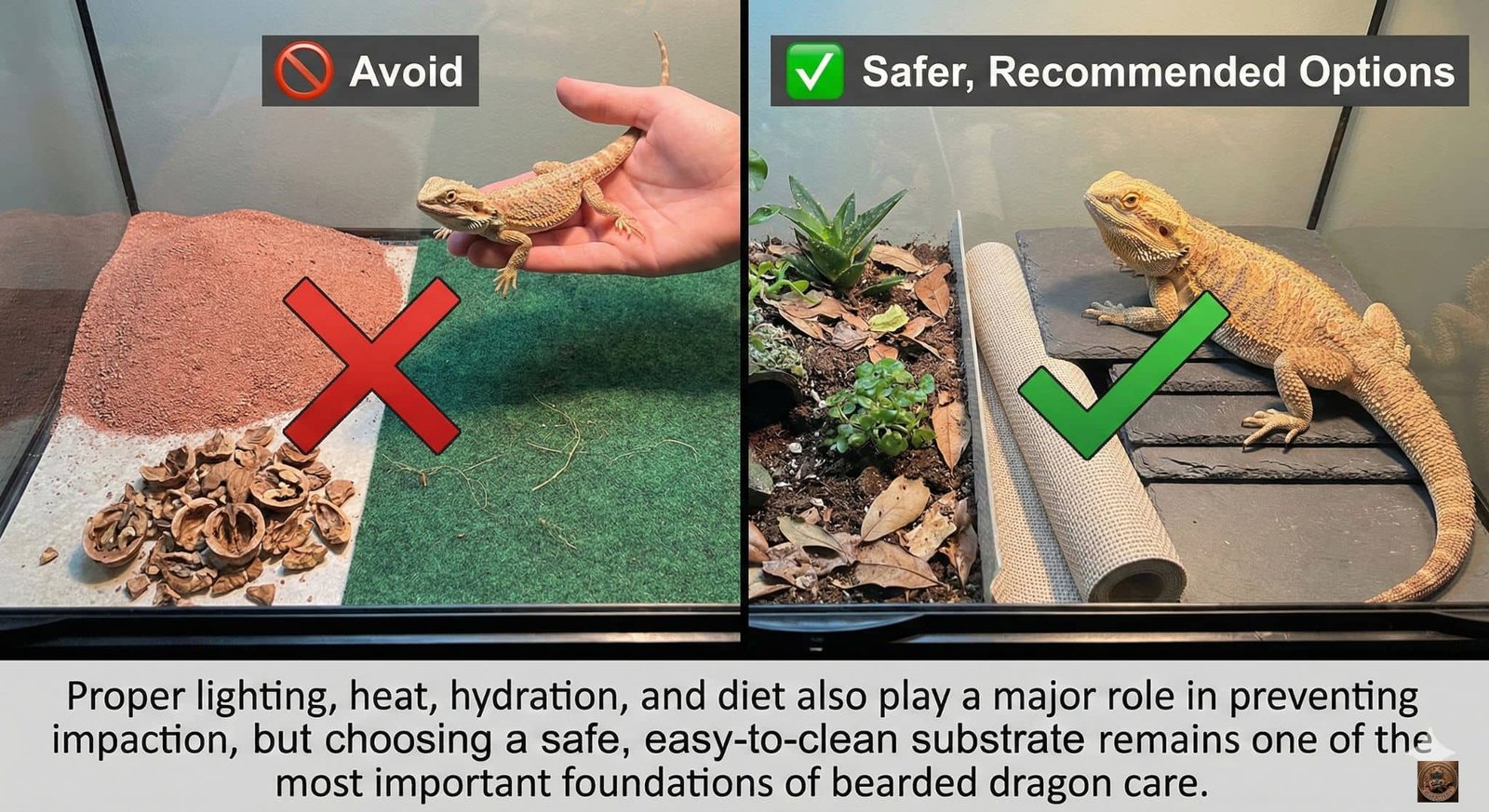
Substrate choice is one of the most debated topics in bearded dragon care. The wrong bedding can increase the risk of impaction (intestinal blockage), bacterial growth, and hygiene problems. For long-term health, safety and cleanliness should always come before aesthetics.
- Calcium sand: Often ingested and associated with impaction.
- Walnut shells: Sharp particles can irritate the digestive tract and cause blockages.
- Reptile carpet: Traps bacteria, holds waste, and can snag nails or toes.
These substrates are widely discouraged by reptile veterinarians and modern husbandry guides.
✅ Safer, Recommended Options:- Slate or ceramic tile: Highly hygienic, easy to disinfect, retains heat well, and helps naturally wear down nails.
- Non-adhesive shelf liner: Affordable, washable, and safe when kept clean and dry.
- Bioactive substrate (advanced keepers only): Supports natural behaviors and enrichment when properly designed and maintained, but requires experience and careful monitoring.
Proper lighting, heat, hydration, and diet also play a major role in preventing impaction, but choosing a safe, easy-to-clean substrate remains one of the most important foundations of bearded dragon care.
- Safe vs. Toxic Substrates
- The Truth About Calcium Sand
- Cleaning & Sanitation Routine
- Bioactive Setup for Pros
Decor & Enrichment
A barren tank is a boring life. Your dragon needs to climb, hide, and thermoregulate. Proper decor isn't just decoration; it's essential for their mental health.