

Feeding your reptile shouldn't be a guessing game. One of the most common questions new owners ask is: "What can bearded dragons eat?"
With so much conflicting advice on the internet, it’s easy to feel overwhelmed in the produce aisle. But getting nutrition right is the foundation of a long, healthy life for your pet. As we outline in our comprehensive Ultimate Bearded Dragon Care Guide, a proper diet prevents serious health issues like Metabolic Bone Disease (MBD) and obesity.
This guide breaks down the essential bearded dragon food list, categorized by daily staples, occasional mixers, and the dangerous foods you must absolutely avoid.
The Golden Rule: The 80/20 vs. 20/80 Diet
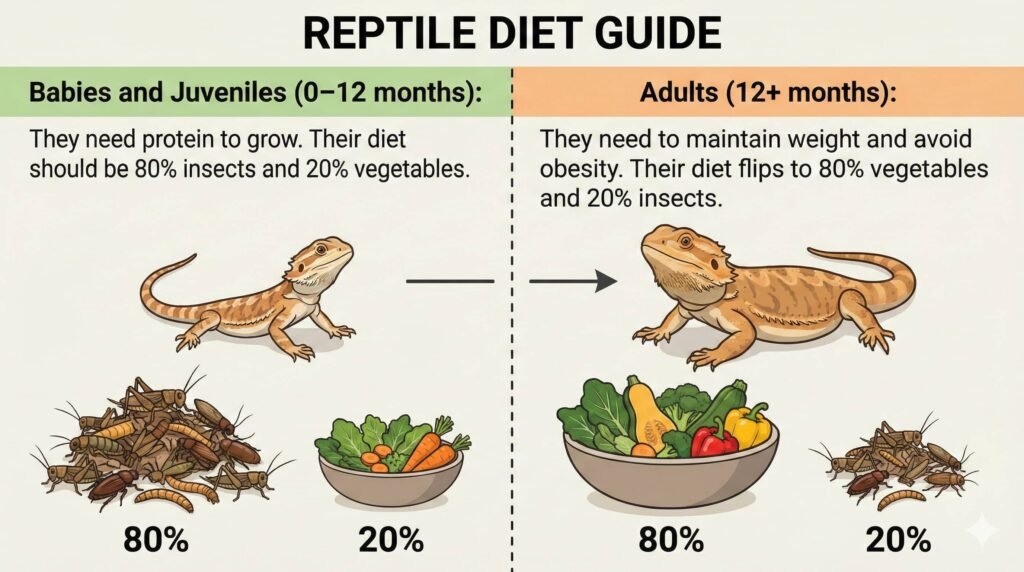
Before diving into specific ingredients, it is crucial to understand that your dragon's nutritional needs change as they age.
- Babies and Juveniles (0–12 months): They need protein to grow. Their diet should be 80% insects and 20% vegetables.
- Adults (12+ months): They need to maintain weight and avoid obesity. Their diet flips to 80% vegetables and 20% insects.
👆 Important information, new beardie owners
1. Staple Greens (The "Daily" Salad)
These should make up the bulk of your dragon's salad bowl. These greens are rich in calcium and safe to eat every single day. If you are looking for the best staple greens for bearded dragons, stick to this list:
- Collard Greens: High in calcium and widely available.
- Dandelion Greens: Excellent nutrition (ensure they are pesticide-free if picked outside).
- Mustard Greens: Peppery taste that many dragons love.
- Turnip Greens: Great calcium-to-phosphorus ratio.
- Arugula (Rocket): Good, but can be pricey.
- Endive & Escarole: Textural variety for their salad.
Pro Tip: Avoid using iceberg lettuce or romaine as a staple. They are mostly water and offer very little nutritional value.
2. Safe Vegetables (Mixers & Toppers)
You can mix these into the salad 2–4 times a week to add variety, hydration, and color. These are safe vegetables but shouldn't be the only thing they eat.
- Butternut Squash: A superstar veggie! High in Vitamin A and great color.
- Bell Peppers: All colors are safe (remove seeds).
- Carrots: Grated raw (high in Vitamin A, so don't overfeed).
- Green Beans: Chopped raw.
- Snap Peas: Chopped, edible pod and all.
- Zucchini / Yellow Squash: Good for hydration.
3. Fruits (The "Candy" of the Lizard World)
Dragons have a sweet tooth, but fruit is high in sugar and can cause mouth rot or digestive issues if overfed. Treat fruit like candy: offer it sparingly (once a week or less).
- Berries: Blueberries, strawberries, raspberries (high in antioxidants).
- Apples: Peeled and chopped (remove seeds, they contain trace cyanide).
- Mango & Papaya: tasty tropical treats.
- Watermelon: Only as a rare treat for hydration (very high water/sugar content).
4. The Insect Menu
Whether you have a baby or an adult, live insects are non-negotiable. Never feed dead or freeze-dried insects as a primary diet—they lack moisture and nutrients.
Staple Feeders (Daily/Regularly):
- Dubia Roaches: The gold standard. High protein, low fat, easy to digest.
- Crickets: The classic choice. Gut-load them before feeding.
- Black Soldier Fly Larvae (NutriGrubs): Naturally high in calcium.
- Silkworms: Excellent for picky eaters.
Treat Insects (High Fat - Feed Sparingly):
- Waxworms
- Superworms (only for adults due to hard exoskeleton)
- Hornworms (mostly water, good for hydration)
5. DANGER ZONE: Toxic Foods for Bearded Dragons
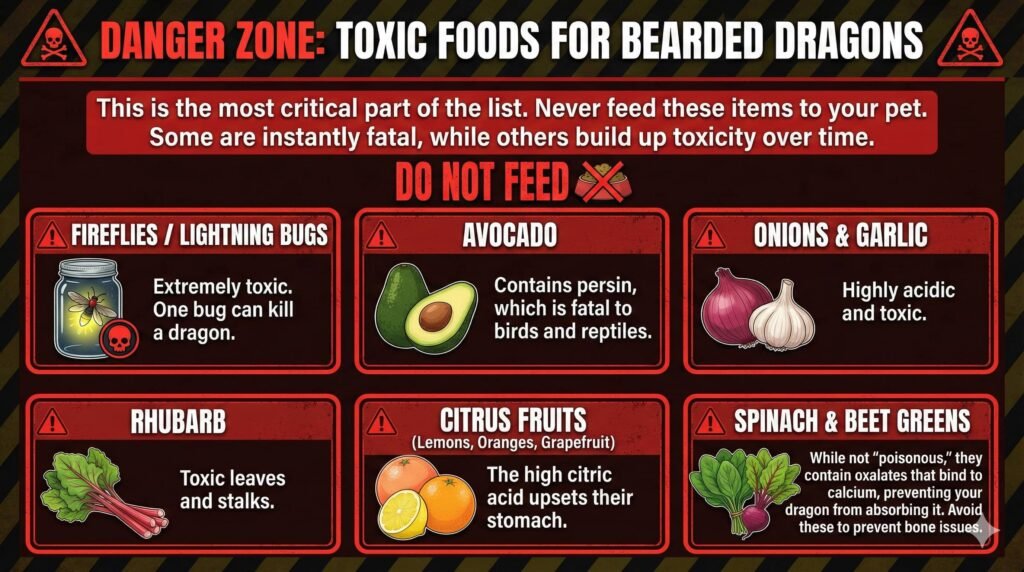
This is the most critical part of the list. Never feed these items to your pet. Some are instantly fatal, while others build up toxicity over time.
- Fireflies / Lightning Bugs: Extremely toxic. One bug can kill a dragon.
- Avocado: Contains persin, which is fatal to birds and reptiles.
- Onions & Garlic: Highly acidic and toxic.
- Rhubarb: Toxic leaves and stalks.
- Citrus Fruits (Lemons, Oranges, Grapefruit): The high citric acid upsets their stomach.
- Spinach & Beet Greens: While not "poisonous," they contain oxalates that bind to calcium, preventing your dragon from absorbing it. Avoid these to prevent bone issues.
Final Thoughts on Feeding
Creating a balanced diet doesn't have to be complicated. By focusing on high-quality staple greens for bearded dragons and rotating in safe veggies and insects, you mimic their natural environment.
Remember to always dust your insects with Calcium powder (without D3) at every feeding, and use a Multivitamin once a week.
Ready to set up the perfect habitat for your healthy dragon? Check out our guide on Habitat Setup & Lighting.
0 Comments